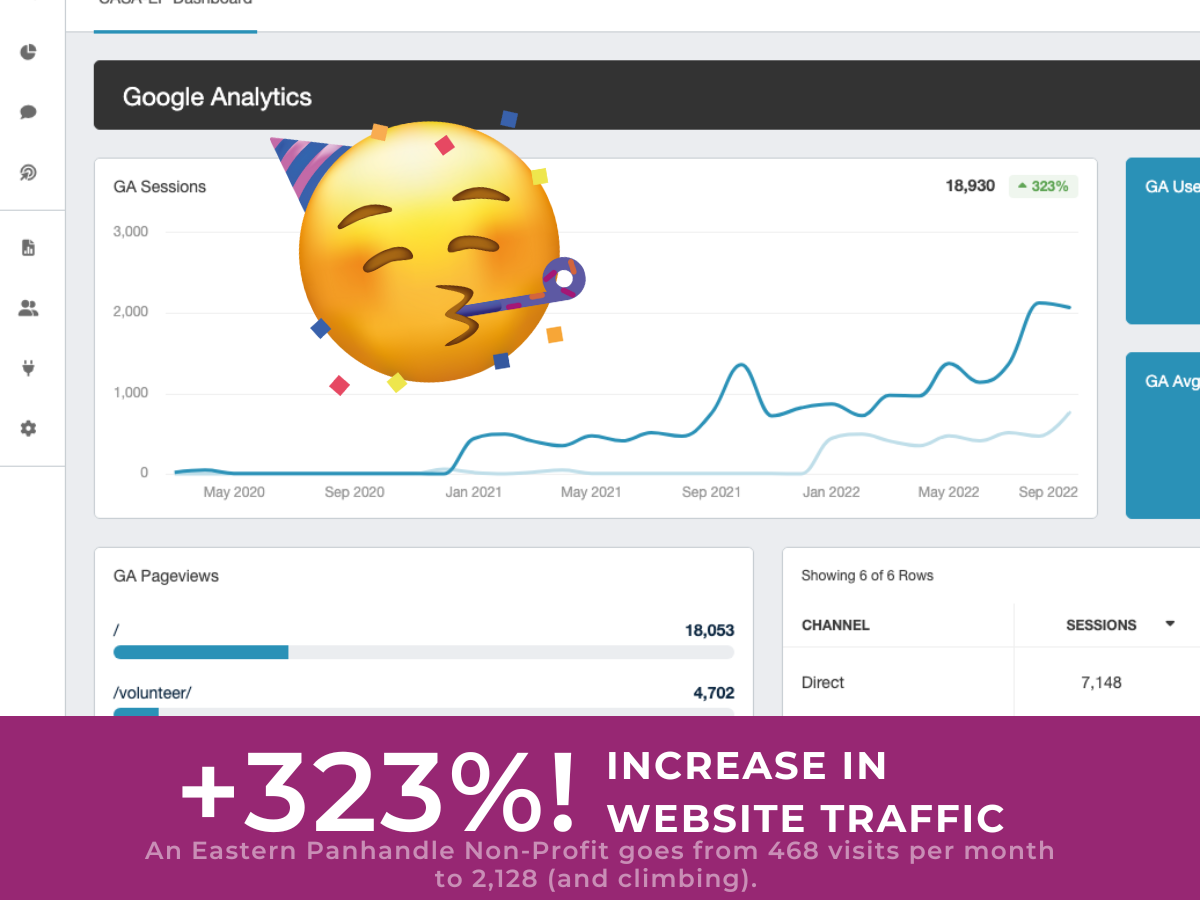
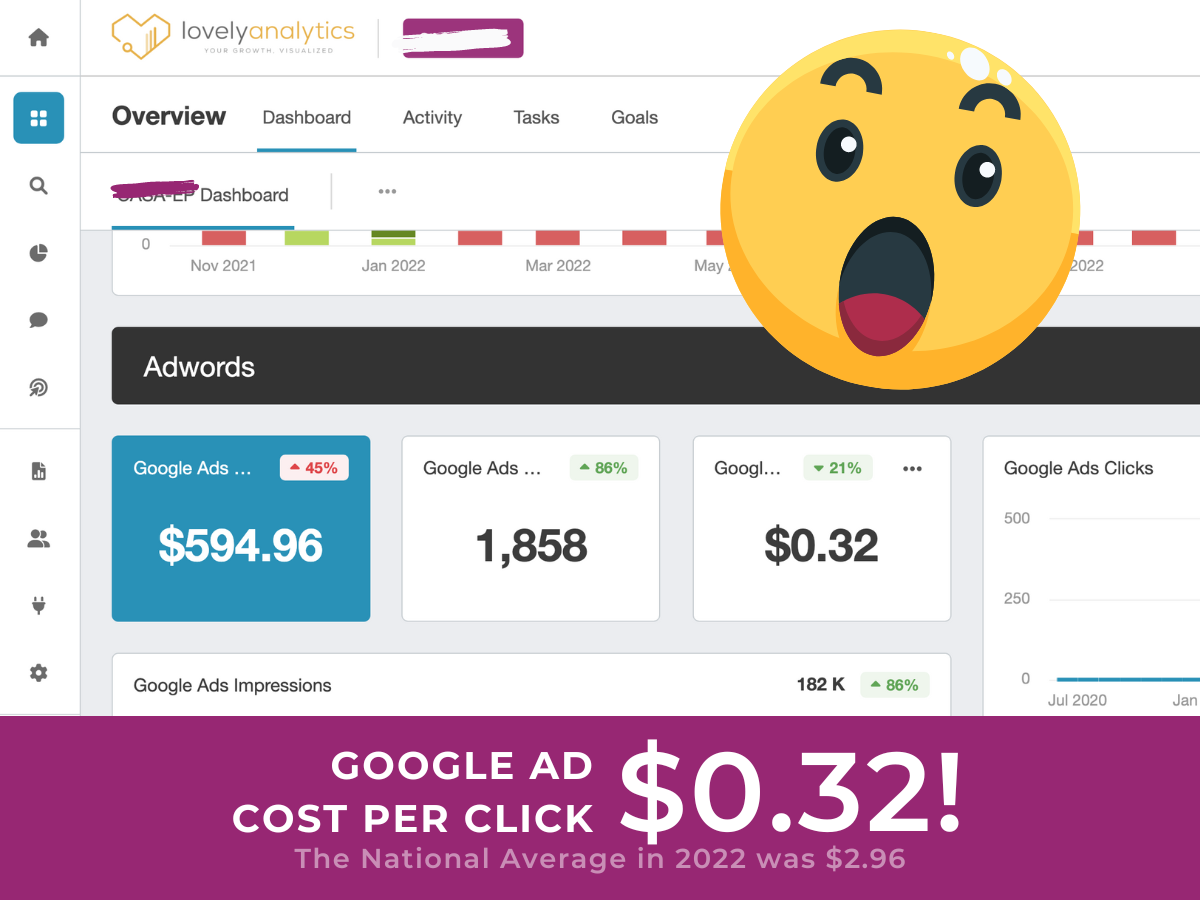
Are you a small business owner who is currently, or just recently ran a digital marketing campaign, and don't know if you're getting a return on your investment? We're here to help – but making that determination isn't as easy as you might think.
Imagine that you're a treasure hunter. Your treasure map is your latest digital marketing campaign. You followed the map, but where did it lead? Did you find gold in El Dorado, or did you find a pile of digital dirt? Perhaps you aren't even sure what you found, and don't know where to start. That's what ROI (return on investment) figures can tell you. What you learn in terms of ROI can guide you to smarter marketing decisions, but how do you go about measuring your ROI when it comes to digital marketing campaigns?
How To Measure Return-On-Investment of a Digital Marketing Campaign
Understanding the Fundamentals
Calculating ROI seems straightforward on the surface. If you're looking for return on spend or an ROI percentage, you'd subtract your digital marketing campaign costs from the generated revenue, divide that result by the cost, and multiply by 100 to obtain a percentage.
Example: Let's say you spent 1,000 bucks running ads for your restaurant last month, and that brought in $2,500 in additional profit from tables. If we subtract 1,000 from 2,500, that means we profited $1,500, and if we divide 1,500 by 1,000, that means for every dollar we spent, we profited $1.50. Multiply 1.50 by 100 to reach the ROI percentage of 150.
Some businesses simply look for cost per lead, or cost per customer to get a better understanding of ROI. If you know what you're paying per customer to get them in the door, and you know what you make (profit-wise) off of an average customer, then you know if your ROI is sufficient to continue with your digital campaign.
Example: Let's say you spent 1,000 bucks running ads for your restaurant last month, and that brought in 25 additional customers. If we divide 1,000 by 25, we find that we spent $40 per customer. If we make an average of $100 off of each customer, then our ROI per customer is $60. This isn't super specific – but it is likely adequate for you as a restaurant owner to feel comfortable in continuing, or even spending more on your digital marketing campaigns.
The above examples assume that you can just somehow magically link the restaurant customers and profit to a specific digital marketing effort. The real challenge lies in accurately identifying 'revenue' or 'profit generated' and correctly attributing it to your specific campaign.
So How Do I Actually Measure ROI? (4 Steps)
1. Plan Ahead
If you want to track ROI for your digital marketing campaigns, you need to plan ahead.
One of the best ways to measure ROI is to plan a very specific route for customers / potential customers to take through your digital marketing campaign.
Let's imagine that you own a roofing business, and you decide to buy ads on Nextdoor for your local community. You have two options to begin to track ROI here:
- Send ad traffic to your website homepage, and then try to figure out later with Google Analytics where the homepage visitors came from, or...
- Send ad traffic to a landing page, and isolate that landing page so that traffic can't access it from any other method than Nextdoor.
The second option would likely be best; not only because it makes ROI tracking easier, but because it allows you to create a landing page experience that is unique to visitors coming from Nextdoor, in this example. The overall idea is, you need to know who's who. This becomes especially important when you start running multiple digital marketing campaigns at once, and don't want to mix them up. Being able to keep them separate means you can sink more marketing dollars into the stuff that's working best for you, and less into the methods that aren't.
While a landing page is a great idea for most digital marketers, there are other methods which may work better, or in tandem with a landing page to help you track ROI. Here are a few examples:
- Promo codes - Promote a specific code like "newroof" in your marketing campaign. Then, when a customer calls and mentions that code, or completes a form with that code, you'll know where they are coming from.
- QR codes - QR codes can be set up to send visitors to where you want them to take action, and allows subtle difference between codes that you can track ROI with later.
- Tracking pixels - Many services, like Facebook, will provide you with tracking code that you can install on your website. By putting that in place, you'll be able to track visits and conversions better from that source.
2. Assign value to your customer
Valuing a customer can be tricky, too, depending on the type of business you own.
A homebuilder, for instance, might say they can expect to get $50,000 of value/profit out of a home build, with no recurring business. Calculating ROI is fairly simple in this case, because if you spend $5,000 landing a customer, you're left with $45,000 in profit.
A landscaping business might expect to bring in $5,000 every year they keep a particular customer, so they could value a customer based on the average age that a customer sticks around (in the case of the landscaper, that might be 5+ years of recurring revenue). In this case, you could weigh the marketing expense against the first job, or against the first full year of revenue, or a year's revenue times the average age a customer stays with your business. Obviously, if you're landing a customer for less than what you make off of the first lawn mowing, you're doing great.
3. Embrace the Digital Toolbox
Once you have a specific route / action in mind for your customers or specific customers, you need to actually track their actions.
In the digital world, tools are like the Swiss Army knife for your campaign, packed with all sorts of handy gadgets. Google Analytics, for instance, helps you deduce where your traffic is coming from and what it's doing on your site. Social media analytics tools are like having your own social media detective agency, sniffing out insights from likes, shares, and comments.
If you don't already have one, you should also strongly consider a CRM (customer relationship management platform) for your business, like Salesforce, Keap, or Hubspot, to help track ROI, lead sources, and customer information.
But remember, a tool is only as good as the person using it. You need to know how to use the tool as well as what you're looking for. Are you tracking conversions, bounce rates, or engagement? Each metric is a piece of the puzzle, and together, they help you see the ROI picture more clearly.
Look beyond the surface and uncover the stories behind the numbers. With advanced analytics, you can identify patterns, predict trends, and make data-driven decisions that boost your ROI. It's like looking at the ocean from two different perspectives. On the surface, you see waves and ripples (basic metrics). But as you dive deeper, you discover the vibrant, complex ecosystem below (customer behaviors, preferences, and experiences).
Brand awareness, customer engagement, and loyalty: these intangibles are vital yet notoriously hard to quantify. But fear not, for in our digital toolbox, we have ways to give these shadows substance.
Surveys, sentiment analysis, and social listening tools turn the intangible into tangible data. By understanding how customers feel about your brand and how they interact with it, you can glean insights that directly influence ROI. It's like being a mind reader (but without the creepy factor).
4. Train and Ready Your Team
Before your digital campaign goes live, don't forget to tell everyone on your team who interacts with customers / potential customers (sales, customer service, etc). There's nothing worse than a customer calling to take advantage of a particular promo, and the person who answers the phone has never heard of it.
You and your team are actually one of the best ways to track ROI. Every time someone sits down to the table at your restaurant, or checks in to your office, or simply calls in, ask them how they heard about your business. Not only should you and your team be asking this question– but you should also be recording it somewhere. In a CRM is ideal, but if an Excel sheet or Post-It are all you have, that's better than nothing.
There's always a chance for human error here, but it's better to ask than to guess or not to know at all. Some folks are more prone to remember their last-touch attribution (they may remember going onto your website yesterday, but not seeing your social media posts for the last six months). And others are more prone to remember their first-touch attribution (they know about the mailer they received two weeks ago, but won't recount all the Youtube videos they've watched on your channel since).
Advanced: Attribution Models
Attribution in digital marketing means determining which touchpoint ultimately led to a customer's conversion. Customers often interact with multiple channels, like social ads, blog posts, or emails, before making a purchase. Deciding which touchpoint deserves the most credit is key for accurate ROI measurement, and which touchpoints are applicable to your business.
Different attribution models exist, such as last-touch, first-touch, linear, and time-decay. Each offers its benefits and limitations. Let's break down some of the most common attribution models:
- Last-Touch: This model gives 100% of the conversion credit to the very last interaction a customer has with your brand before converting.
- First-Touch: Conversely, this model attributes 100% of the credit to the initial point of contact that introduces a customer to your brand. This is commonly used if you are primarily interested in answering the question "how did they (your customer) hear about us?"
- Linear: With this model, each touchpoint along the customer's journey receives equal credit for the conversion.
- Time-Decay: This model assigns more credit to touchpoints that occur closer to the conversion, recognizing the heightened influence of recent interactions.
No attribution model is perfect. Last-touch models can undervalue early interactions that create awareness and interest, while first-touch models may overlook the final nudge that led to the purchase. Linear models offer simplicity but lack the nuance to emphasize specific touchpoints that carry more weight. The right attribution model depends on your campaign goals and the nature of your customer journey.
Advanced: A/B Testing
It's like having two parallel universes where you can test how small changes affect your campaign's performance. Change a headline, tweak a call-to-action, alter an image, and then sit back and watch how each version performs. A/B testing allows you to make data-driven decisions, reducing guesswork and enhancing ROI.
But beware: don't change too many elements at once, or you'll end up like a mad scientist who can't remember which potion caused the explosion.
So then – what can I learn from ROI?
Having data isn't enough: you need to know exactly how to read it and then how to make use of it.
A low ROI may signal the need to re-evaluate your campaign strategy. Maybe you're advertising in the wrong place? Maybe you're being a little too competitive in your bids? Maybe you just need to spend your money elsewhere?
A high ROI means you're likely doing things right, but that doesn't mean you couldn't do better. Typically, small business owners will funnel the majority of their marketing dollars into efforts that have a high return. It is; however, important to remember that many efforts have diminishing returns. Just because you're getting a 200% return on investing $1,000 month doesn't mean you'll get a 400% return if you decide to invest $2,000. Remember, there are only so many potential customers.
What's low, and what's high then? It depends on the business – but at the end of the day, you're ideally able to take the profit from one customer and use it to get several more customers. For some businesses, it's okay to break even on spend versus initial profit, especially if you are planning to keep your customers for many years.
Then, there's a negative ROI – which means you're losing money on the effort. This sounds awful, and in most cases it is– but there may be some rare occasions where it's alright. Again, it depends on your business. For instance, if an average customer refers 3 more customers because of a referral program, then you might value the 3 customers as worth the initial effort. You might also offer a 'lost leader,' or a service / product that you lose money on, just to build the relationship and hopefully make many more sales of other products and services down the road.
You need to be ready to pivot your strategy based on the ROI you're seeing. Is a particular campaign not performing well? Shift your focus. Is a specific demographic responding better than anticipated? Double down on that and/or bid more competitively on your advertisements. The worst thing you can do is pay no attention to ROI just because the phones are ringing and your team is busy.
The Importance of Taking a Holistic View
Measuring digital ROI requires looking beyond direct sales figures. Analyze how your marketing efforts impact customer behavior by tracking metrics like:
- Website dwell time: Longer dwell time suggests greater engagement. Shorter dwell time may mean you need to improve your landing page experience, or create a better match between
- Newsletter sign-ups: Indicate interest in your brand and content
- Social media brand mentions: Reveal the reach of your campaign
These metrics are valuable indicators of campaign effectiveness and provide clues for fine-tuning your strategy.
ROI shouldn't be measured in isolation. It's interconnected with various aspects of your business, including customer service, product quality, market trends, and even the weather (ever tried selling ice cream in a blizzard?). A holistic approach is like throwing a net wide enough to catch all factors influencing your campaign's success. It helps in understanding the big picture and making informed decisions. Keep all the factors that influence your business in mind when tracking and seeking to understand the ebbs and flows of ROI.
Digital marketing is not an island but just a part of your larger marketing ecosystem. An integrated marketing approach ensures that all channels, online and offline, work in harmony. By integrating your digital campaigns with other marketing initiatives, you create a cohesive customer experience. This harmony enhances brand consistency and improves ROI as you leverage the strengths of each. Looking to work with a local digital marketing company to improve your ROI and expand your marketing ecosystem? Call us at 304.207.0678 or simply contact us to get started.